
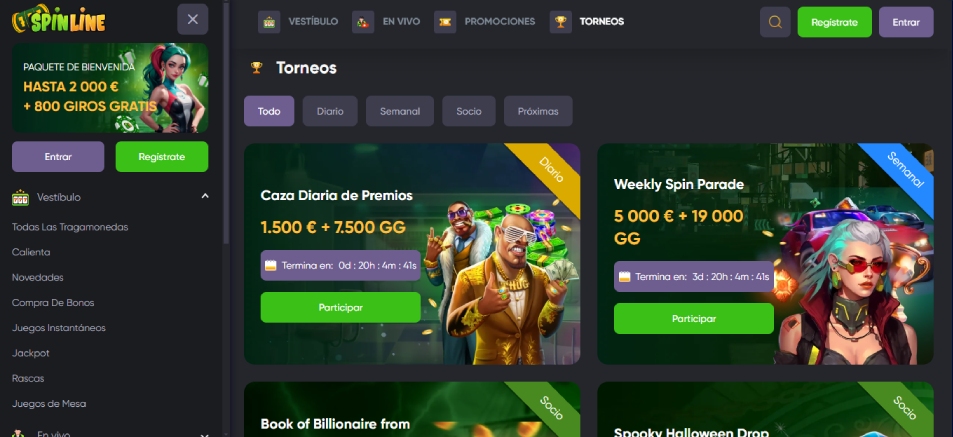
We developed the Spinline Casino mobile app to offer you reliable gameplay without draining your monthly data allowance. The team invested months profiling network traffic on Telstra, Optus and Vodafone 4G and 5G towers to find the sweet spot between picture quality and lean data transfers. On a standard Australian mobile plan, a mixed hour of pokies and table games rarely uses click to learn more than 35 MB of data, and casual lobby browsing stays well under 2 MB per minute. Live dealer tables demand more bandwidth, but we use adaptive bitrate streaming that drops quality automatically when your connection weakens. Here’s a detailed look at how much data each game mode uses, what performance you need, and which settings to tweak so every megabyte counts.
The way the Spinline Casino App Utilizes Data Across Game Modes
Various game types possess very distinct data footprints, and recognizing the split helps you plan your session. Our HTML5 pokies load graphics and audio algorithms in the first spin, then move into a steady 0.4 MB per 10 spins when auto-play is on. Table games like blackjack and roulette are far lighter, pulling roughly 0.12 MB per hand or spin because they reuse texture atlases already cached in memory. The real data draw stems from live casino streams. On a stable connection, our 720p adaptive stream uses around 4 MB per minute, though the app will step down to 480p and about 1.8 MB per minute if it senses a 4G signal hovering below three bars. We persist refining these thresholds using real-world log data from Australian suburbs and regional centres.
Connection Specifications for a Lag-Free Session
We set the baseline at a stable 2 Mbps download speed for all pre-recorded content, which is simple for a one-bar 4G signal. Live casino games need 5 Mbps to sustain HD tiles without buffering, and we also monitor jitter and packet-loss ratios behind the scenes. In field tests around Sydney’s Inner West and the Gold Coast, latency under 60 milliseconds kept betting rounds completely in sync. Spikes above 150 milliseconds triggered our integrated catch-up protocol that replays the last 1.5 seconds of dealer action without disrupting your stake placement. Even on a busy peak-hour tower, the app caches enough game state to handle a three-second drop, so a short network glitch won’t void your wager. We advise running a quick speed test from the app’s support menu before joining a live table for the first time each day.
Operation on Favored Australian Devices
Our QA lab keeps a bunch of the most-used phones from our Australian players, and we test every release on Samsung Galaxy A and S series, Apple iPhones from the 11 onward and mid-range Oppo and Google Pixel models. Phones with at least 3 GB of RAM handle everything without micro-stutters. Models with 2 GB might see marginally longer lobby load times—around 2.2 seconds instead of 1.1 on a Galaxy S23. Thermal performance is important a lot in an Australian summer. We developed a frame-pacing governor that cuts GPU load by 15 percent when internal sensors surpass 40 degrees Celsius, preventing frame drops during long pokies streaks on a sun-drenched balcony. We post minimum specs inside the Help tab, but our rule of thumb is straightforward: if your phone runs Android 8.0 or iOS 14 with a stable OpenGL ES 3.0 driver, the app will operate predictably.
Live Casino Streaming Data Overview
Live dealer setups consume the highest data, so we handle their architecture as a broadcaster. Each table sends an uninterrupted MPEG-DASH stream split into two-second chunks, and our client-side player measures bandwidth post-chunk to determine if it should request the following one at a higher or lower resolution. Playing at a blackjack table with a robust 5G signal, you should see crisp 720p video with 30 frames per second, burning about 3.8 MB per minute. Enter a fringe reception area and the app silently switches to 480p, reducing consumption to 1.8 MB per minute while still keeping card faces fully readable. Audio represents less than 5 percent of the entire stream volume because we code speech at 48 kbps Opus, a codec that keeps intelligible even across spotty regional links.
Minimising Data Consumption Through In-App Settings
The app has a dedicated Data Saver panel with precise control over what the app requests from the network. The toggles combined can cut usage by up to 40 percent while maintaining the interface functional. We made the labels straightforward about what you lose with each switch, so you can make informed decisions mid-session.
Data Saver Toolkit
The toolkit gives you three levers, trialled on low-end phones using regional towers across Australia. Turn one or all on to change how much the app compresses media and delays non-essential downloads.
Visual Presets Explained
The Low preset forces all video previews and live streams to 360p, caps pokies animation frame rates at 20 fps and disables background lobby animations. That cuts hourly consumption down to around 18 MB for pokies and 55 MB for live casino. Balanced locks streams to 480p and keeps frame pacing at 30 fps, landing between 40–80 MB per hour depending on your game mix. High enables the full 720p pipeline and runs unthrottled at 60 fps, peaking at about 180 MB per hour of live dealer action. We also offer a Custom slot that lets you set separate ceilings for live betting, pokies and promotional banners on the same screen—handy if you jump between games while watching your plan’s expiry clock.
Get Footprint and Installation Data Requirements
The initial download from the Spinline Casino APK portal comes in at 48 MB. We held it that tiny so you can load it on a 500 MB prepaid top-up without worry. After you grant the required permissions, the app extracts core libraries and fetches an extra 22 MB of lobby assets on first launch, giving a clean install to roughly 70 MB. We separate the game catalogue into on-demand bundles. Each pokie title pulls its animations and sound pack only when you press the thumbnail, so you never store games you don’t play. A popular pokie could grab 8–12 MB of graphics the first time you launch it, but after that it reads from the device cache and only consumes under 0.5 MB for update checks. We keep legacy asset purging aggressive; files not accessed for 30 days are automatically tagged for removal unless you pin them.
Data in the Background , Push Notifications and Refreshments
We regard background data as a privilege, not a standard. When you minimise the app, all lobby refresh cycles pause within 15 seconds. The only persistent connection is a slim push socket that provides account-relevant alerts. That socket fires a keep-alive ping every four minutes, using roughly 0.3 KB each time, which adds up to less than 5 MB over an entire month of idle standby. App version updates arrive as differential patches wherever feasible. A typical fortnightly patch weighs 6–10 MB instead of re-downloading the full 48 MB package. We defer non-critical asset updates until the device is connected to unmetered WiFi, a option you can switch under Settings > Updates. This design means even a player who only uses mobile data and never manually checks for updates will rarely see a surprise drain on their prepaid allocation.
Assessing App Performance Against Australian Network Topology
During the last six months we recorded session data from metro tunnels, coastal highways and mining-town towers to see how the app behaves when ping times double between Telstra’s city exchange and a roaming partner in the https://en.wikipedia.org/wiki/Buzzword_bingo Pilbara. Our numbers indicate that the average round-trip time for bets submitted from Brisbane, Melbourne and Perth averages 41 milliseconds, with 99th-percentile spikes of 180 milliseconds during school-hour peaks. Even at 180 milliseconds, the predictive UI thread draws the card flip or roulette spin before the server confirmation lands, so you feel no lag. The biggest performance variable we’ve identified isn’t speed; it’s tower congestion. During Friday night footy matches, packet-loss rates can rise to 3 percent, yet our retransmission logic restores every gaming command without the player noticing a stutter.
Handy Tips for Managing Data on Pay-as-you-go and Fixed Plans
Australian mobile plans often look generous until you commence streaming. A few habits need nothing and keep your data for the moments that matter. Preview a game’s rule screen on WiFi first to prepare its graphics bundle before moving to mobile data. Schedule automatic updates for overnight WiFi windows so your morning commute session never triggers a download. Enable the in-app data tracker overlay, which displays live megabyte counters per session and per day; looking at it once every 20 spins keeps you far more mindful than a carrier bill. And before a long-haul session on 4G alone, follow this checklist:
- Adjust the streaming quality preset to Balanced or Low inside Data Saver.
- Turn off auto-play video previews in the lobby carousel.
- Save your three favourite pokies so they stay cached and avoid re-downloading.
- Close background apps that poll for notifications—fewer apps fighting for the modem assists.
- Run the app’s built-in network health test to ensure latency is under 100 milliseconds.
Tracking and Forecasting Your Monthly App Data Consumption
Inside My Account, we created a forecasting engine that examines your past four weeks of play patterns and estimates your next 30 days of data usage under your current settings. The graph breaks consumption into live casino, pokies, lobby navigation and background overhead, then places your chosen plan’s limit as a red line. Tapping any bar displays a tip for that category—like, “Your live baccarat hours are trending 20 percent above last month; switching to Balanced preset would save 280 MB by your next recharge date.” We also provide an opt-in weekly email summary that matches your real consumption against the forecast so you can adapt before the weekend. Over 60 percent of our active Australian users have turned on this feature, and survey feedback consistently highlights it as the reason they escape bill shock while still relishing multi-hour Saturday night sessions. We built the Spinline Casino app to handle data as a resource worth managing, and we trust that transparency fosters trust in every spin you take.